Why Do Toothbrush DNA Tests Fail?
Why Do Toothbrush DNA Fail and How Can I Avoid Common Mistakes?
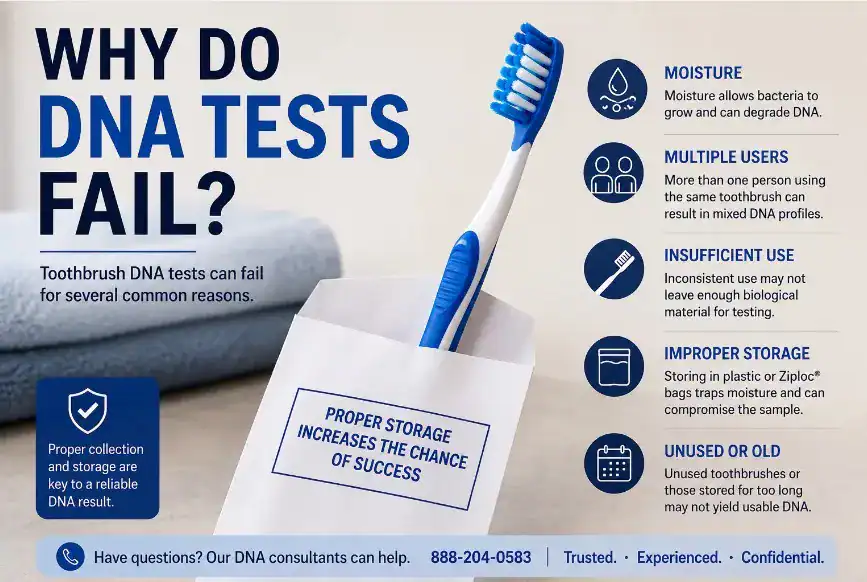
In our experience coordinating forensic DNA testing cases, toothbrush DNA samples used to determine biological relationships may fail to produce a complete DNA profile under the following circumstances:
- Moisture buildup allows bacteria to grow, which can degrade the DNA present on the toothbrush.
- More than one person used the same toothbrush, resulting in multiple DNA profiles being present on the specimen.
- The toothbrush was not used consistently and does not contain enough biological material for the laboratory to recover a complete DNA profile.
- The toothbrush was stored inside a plastic or Ziploc bag, which can trap moisture and compromise the sample.
- The toothbrush was unused or had been sitting for an extended period before submission.
These are some of the most common situations we have encountered that prevent the laboratory from developing a usable DNA profile for comparative DNA analysis. In our experience, proper storage and submitting the toothbrush specimen as soon as possible provide the best opportunity for successful DNA testing.
How Long Does DNA Stay on a Toothbrush?
There is no exact expiration date for how long DNA can remain on a toothbrush. In our experience, the amount of time DNA remains suitable for analysis depends largely on how the toothbrush has been stored and whether the sample has been protected from moisture, excessive heat, and contamination.
Under proper storage conditions, biological material may remain on a toothbrush for months or even years. However, the longer a toothbrush remains unused or improperly stored, the greater the risk that DNA degradation may occur, making it more difficult for the laboratory to recover a complete DNA profile.
For this reason, we recommend submitting toothbrush samples as soon as possible and storing them in a dry environment at room temperature until they are ready to be shipped to the laboratory.
Can an Electric Toothbrush Be Used for DNA Testing?
Yes. An electric toothbrush can be used for DNA testing. The same requirements that apply to a standard toothbrush sample also apply to an electric toothbrush. The toothbrush head should have been used consistently and should be allowed to air dry before being stored inside a paper envelope.
As with standard toothbrush samples, proper storage and avoiding moisture are important factors that help increase the likelihood that the laboratory will recover a complete DNA profile. We recommend submitting the toothbrush specimen as soon as possible to minimize the risk of DNA degradation.
Can Two People Use the Same Toothbrush for a DNA Test?
No. A toothbrush submitted for testing should have been used exclusively by the person whose DNA is being analyzed.
When more than one person uses the same toothbrush, the specimen can contain a mixed DNA profile. A mixed sample can prevent the lab from developing a complete profile or produce inconclusive results. Submit a toothbrush used only by the donor, and store it in a dry environment until it ships to the lab.
Can a Toothbrush Be Used for DNA Testing After Someone Dies?
Yes. A toothbrush sample from a deceased person may be used for DNA testing. However, the same factors that affect any toothbrush specimen still apply. Proper storage, avoiding moisture, and the age of the specimen all influence whether the laboratory will be able to recover a complete DNA profile.
In our experience, toothbrush samples collected from recently deceased individuals generally provide a better opportunity for successful DNA analysis than specimens that have been stored for extended periods. Nevertheless, there is no exact expiration date for DNA recovery. The condition and storage of the toothbrush specimen will ultimately determine the amount of DNA degradation that has occurred and whether the laboratory can develop a complete DNA profile.
For this reason, we recommend preserving the toothbrush in a dry environment and submitting the specimen for testing as soon as possible.
Contact our office at 888-204-0583 for a free consultation with one of our DNA consultants before purchasing an At-Home Toothbrush DNA Test Kit. Speaking with a consultant first can confirm whether a toothbrush specimen is the right option for your situation.

