In-Office Non-Legal Paternity DNA Testing
Helping people looking to confirm father and child for peace of mind purposes.


What is a Non-Legal Paternity Test?
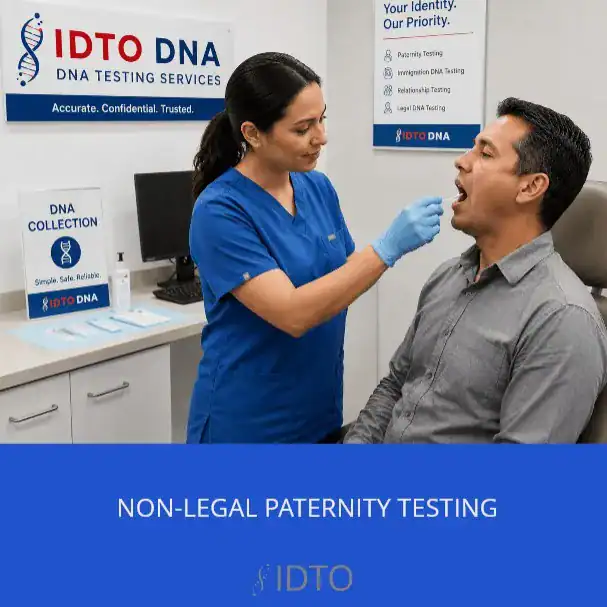
A non-legal paternity test, also known as an informational paternity test, is a DNA test used to determine the probability of paternity between an alleged father and a child. Because the DNA samples are not collected under a legal chain of custody, the results are intended for personal knowledge only and cannot be used as legal evidence in court or by government agencies.
What Is the Difference Between a Legal and Non-Legal Paternity Test?
The primary difference between a legal and a non-legal paternity test is whether the DNA results can be used for legal purposes.
A non-legal paternity test is intended for informational purposes only. Because the DNA samples are not collected under a documented legal chain of custody, the laboratory report cannot be used in court or by government agencies.
This testing option can be completed at one of our collection sites or by purchasing an at-home paternity test kit here.
A legal paternity test follows a strict chain-of-custody process to verify the identity of each participant and the integrity of the DNA samples. The laboratory report may be accepted for legal matters such as immigration, adding a father’s name to a birth certificate, child support, Social Security benefits, inheritance, and other legal proceedings.
Why Choose IDTO DNA
IDTO DNA is a BBB-accredited company that continues to serve people nationwide with their non-legal paternity testing needs. Since 2004, we have been a trusted source for both legal and medical professionals seeking reliable DNA testing for their clients.
Our knowledgeable staff will guide you in selecting the right type of genetic test for your specific situation. This careful attention helps prevent ordering the wrong relationship test and avoids the need to pay for additional testing.
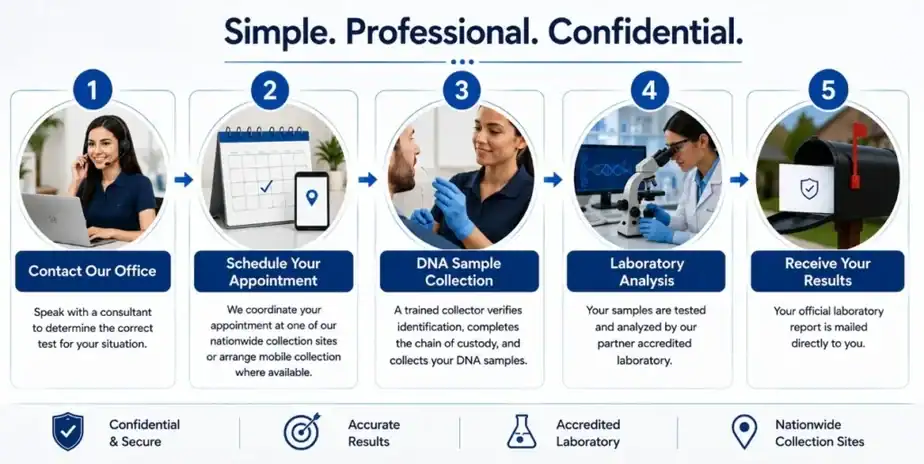
How The Process Non-Legal DNA Testing Works
Who Should Choose a Non-Legal Paternity Test?
A non-legal paternity test is designed for individuals who want to confirm or establish paternity without using the results for legal purposes. Estranged parents often choose this testing option when they want to determine whether a man is the biological father of a child. It is also used by adopted individuals who have identified a possible biological parent and want to confirm the relationship.
While a non-legal paternity test can be performed at home, some people prefer in-office DNA sample collection. This is especially common when the parties do not know or trust one another and want an independent DNA collector to obtain the samples. Having the samples collected in the office can provide additional confidence that the correct individuals were tested.
Not sure which collection option is right for your situation? Contact our office at 888-204-0583 to speak with an experienced DNA consultant.
How much does non-legal paternity test cost?
In-office Non legal paternity testing costs start at $325.00. Click button below to purchase online or to schedule an in-office appointment today.
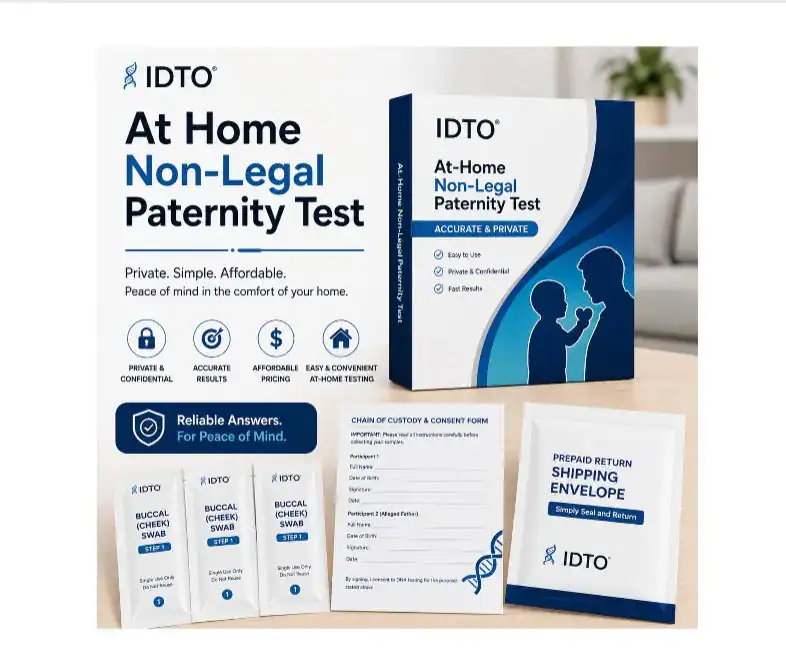
At-Home Paternity Test (Self-Collection)

In-Office Non-Legal Paternity Test
Where can I go to get a DNA test?
Scheduling a peace of mind DNA test is simple. For in-office appointments nationwide call 888-204-0583 to get started.
- Alabama
- Arizona
- Arkansas
- California
- Colorado
- Connecticut
- Delaware
- Florida
- Georgia
- Hawaii
- Idaho
- Illinois
- Indiana
- Iowa
- Kansas
- Kentucky
- Louisiana
- Maine
- Maryland
- Massachusetts
- Michigan
- Minnesota
- Mississippi
- Missouri
- Montana
- Nebraska
- Nevada
- New Hampshire
- New Jersey
- New Mexico
- New York
- North Carolina
- North Dakota
- Ohio
- Oklahoma
- Oregon
- Pennsylvania
- Rhode Island
- South Carolina
- Tennessee
- Texas
- Utah
- Vermont
- Virginia
- Washington
- West Virginia
- Wisconsin
What is the method DNA sample collection?
The standard method of DNA sample collection is a painless cheek (buccal) swab. This method collects cells from the inside of the cheek, providing enough DNA for accurate relationship testing.
Although a blood sample can also be used and provides the same level of accuracy, blood collection is more invasive, typically costs more, and is generally unnecessary because a cheek swab produces reliable DNA results for paternity testing.
Frequently Asked Questions
How long does it take to receive my results?
The average turnaround time for results is 2 to 3 business days from the date the lab receives all specimen samples. Once your analysis completed a copy of your results will be mailed to your home and an additional copy will emailed to you.
Are Non-Legal Paternity Test results accurate?
Yes. Non-Legal Paternity Testing is highly accurate because the laboratory compares specific genetic markers inherited from biological parents. When proper chain-of-custody procedures and accredited laboratory testing standards are followed, DNA testing provides highly reliable results.
Our partner laboratory analyzes between 18 and 22 genetic markers during the paternity testing process to determine the probability of a biological relationship. Inclusion results commonly produce a probability of paternity of 99.99% or higher.
In exclusion cases, additional extended DNA analysis may be performed using up to 27 genetic markers to help determine whether the tested individuals are biologically unrelated.
Please keep in mind home DNA tests are for informational purposes only. Therefore, At-Home DNA Testing for paternity results are not legally admissible. While our Home Tests are intended for informational use only and cannot be used legally, the results are tested to the same strict protocols as legal paternity tests.
Are DNA results confidential?
Yes. Your DNA test results are kept confidential. Results are released only to the individuals directly involved in the DNA testing process or to authorized agencies when required for legal or immigration DNA testing.
IDTO DNA Testing Center and its partner laboratory do not share your DNA information with third-party companies. After your case is complete, DNA samples are typically destroyed within three months in accordance with the laboratory’s retention policies.

