DNA Testing In Two Different States
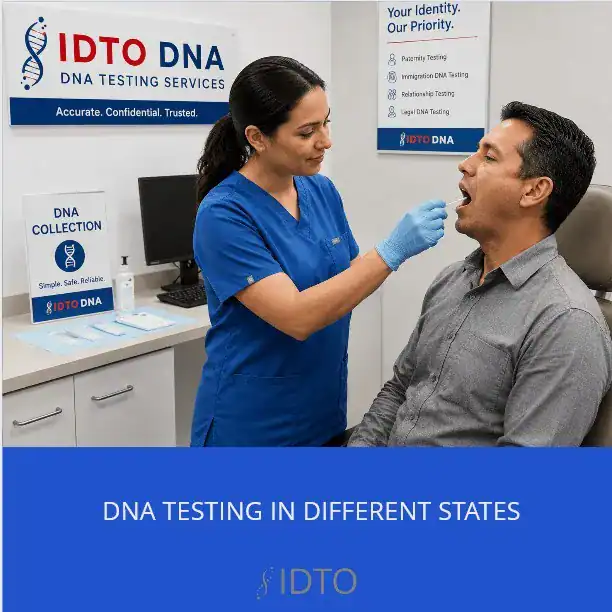
There are situations when establishing paternity via DNA Test may require DNA samples to be collected in two different states. In this post, we will discuss if paternity testing can be performed in two different states.
Please note, the information provided in this post is for informational purposes only and should not be deemed as legal advice. Please contact a family law professional in both states to inquire about paternity establishment guidelines.
Can you perform a Paternity Test In Two Different States?
Yes. DNA testing can be performed when participants reside in different states. In our experience coordinating DNA testing cases since 2004, most people assume everyone must travel to one location. In reality, separate kit shipments or separate collection appointments can usually be coordinated depending on whether testing is being performed for peace of mind or legal purposes.
To schedule an appointment or order an At-Home DNA Test kit, contact IDTO DNA Testing Center at 888-204-0583 to inquire DNA testing to different addresses.
Remember, paternity test appointment scheduling will need the cooperation of all participants involved for a successful DNA sample collection appointment.
What Types of DNA Tests Can Be Performed When Participants Live in Different States?
Below are the DNA testing services we provide that can be performed in different states.
- Paternity Testing
- Sibling DNA Testing
- Grandparent DNA Testing
- Maternity Testing
- Avuncular Testing
- Y Chromosome Testing
At-Home DNA Testing Across Different States
Our At-Home DNA Testing option is a self-collection peace of mind test that can be perform in the comfort of your home. The results from this testing option cannot be used for any legal purpose.
Below are our At Home DNA Test multiple location services we provide. Click the link image below for complete overview of each service process.
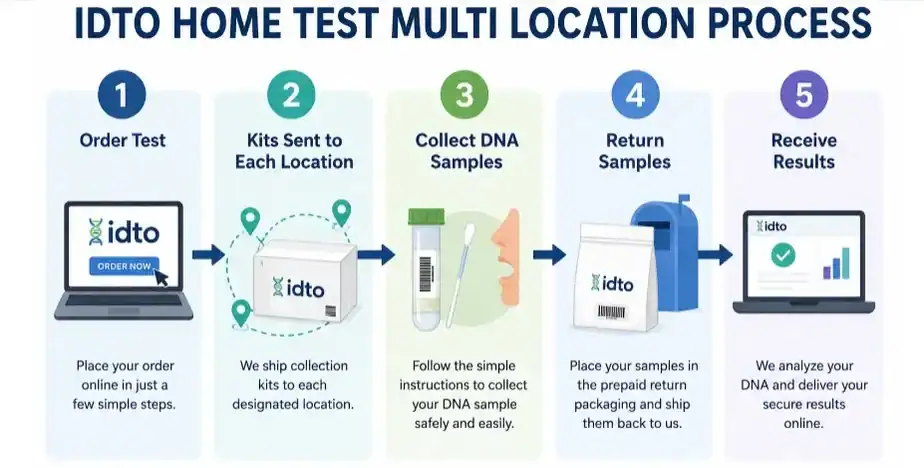

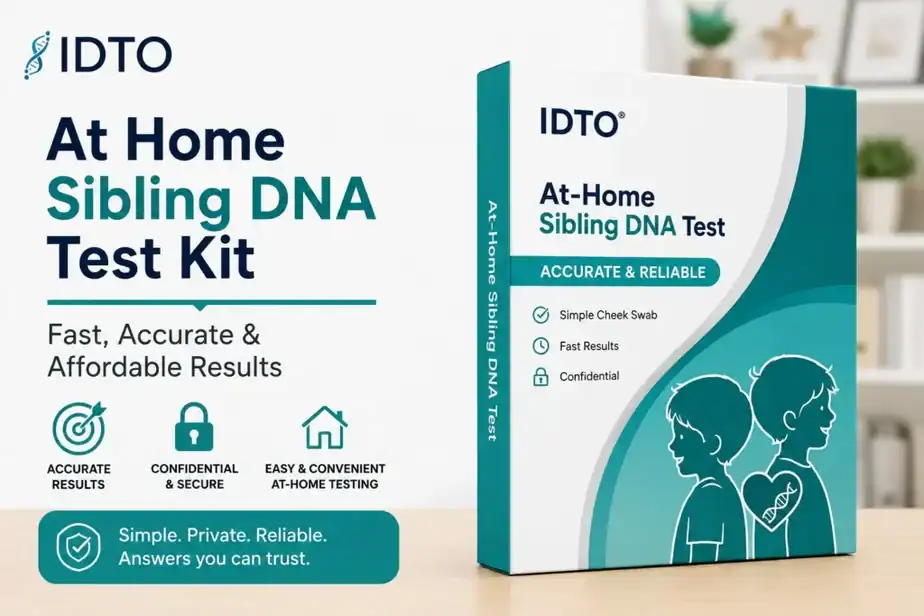

Please Note: *In cases where one party resides in New York State, this testing option cannot be utilized due to the New York State Department of Health regulations. At‑home Peace of Mind Aunt/Uncle Testing cannot be performed within the state of New York.
Can Legal DNA Testing Be Performed When Participants Live in Different States?
Yes. Legal DNA testing can be performed when participants reside in different states. In our experience coordinating DNA testing cases, one of the most important factors is ensuring that everyone involved agrees to participate before appointment scheduling begins.
Once all participants have agreed, we will need each person’s name, address, date of birth, and best contact number. After confirming that collection facilities are available near each participant’s location, our office will coordinate separate DNA sample collection appointments according to everyone’s availability.
Upon the completion of scheduling, each participant will receive an email confirming the date, time, and location of their DNA sample collection appointment.
Below Are DNA Testing Areas We Serve
Alabama
Arizona
Arkansas
California
Colorado
Connecticut
Delaware
Florida
Georgia
Hawaii
Idaho
Illinois
Indiana
Iowa
Kansas
Kentucky
Louisiana
Maine
Maryland
Massachusetts
Michigan
Minnesota
Mississippi
Missouri
Montana
Nebraska
Nevada
New Hampshire
New Jersey
New Mexico
North Carolina
North Dakota
Ohio
Oklahoma
Oregon
Pennsylvania
Rhode Island
South Carolina
Tennessee
Texas
Utah
Vermont
Virginia
Washington
West Virginia
Wisconsin
Establishing paternity in two different states:
Establishing paternity when parents reside in different states can be a daunting process, but it’s definitely achievable. Here’s a breakdown of the key steps involved:
1. Determine Jurisdiction:
- Which state has jurisdiction over the paternity case depends on various factors, such as the child’s residency, the parents’ residency history, and where the child was conceived.
- Usually, the state where the child lives or has lived for the past six months has jurisdiction. However, other states might have jurisdiction if the father lived there for a specific period or if the child was conceived there.
2. Initiate Paternity Proceedings:
- The parent seeking to establish paternity (usually the mother) will file a paternity petition with the family court in the state with jurisdiction.
- If accepted, The judge will order for genetic testing and, if paternity is established, child support and visitation rights will be established
3. Serve Notice and Documents:
- The father will need to be served with the petition and other court documents, even if he lives in another state.
- This can be done through personal service (delivering the documents directly to the father) or certified mail with return receipt.
4. Genetic Testing:
- Both parents and the child will undergo DNA testing to determine paternity with near certainty.
- Courts typically order genetic testing through a court-approved laboratory to ensure accuracy and admissibility as evidence.
- Please note, if both agree a paternity test can be performed before signing a voluntary acknowledgment of paternity form. Remember, DNA Testing services we provide are performed by our partner AABB laboratory which is a criteria when submitting evidence in family court.
Additional Considerations:
- Uniform Interstate Family Support Act (UIFSA): This law simplifies child support enforcement across state lines. If a child support order is issued in one state, it can be enforced in another state through the UIFSA.
- Attorney Representation: Consulting with an attorney experienced in paternity cases in both states can be beneficial, especially if the case is complex or there are disagreements between the parents.
While legal DNA testing can be coordinated when participants live in different states, establishing paternity through the courts may involve additional legal considerations. Jurisdiction, child support enforcement, and family court procedures can vary depending on the states involved. Below is a general overview of the process.
Frequently Asked Questions
How Accurate Are My Results When Participants Live in Different States?
Living in different states does not affect the accuracy of your DNA test results. Once all DNA samples arrive at the laboratory, the same testing procedures and quality standards are applied regardless of where the participants live.
For legal DNA testing, trained specimen collectors in each city follow strict chain-of-custody procedures before the samples are sent to our partner AABB-accredited laboratory for analysis. As long as the DNA samples are properly collected and handled, the accuracy of the DNA test will be the same as if all participants were tested at the same location.
All legal DNA tests are performed through our partner AABB-accredited laboratory. This accreditation helps ensure that DNA test results are recognized by family courts, immigration agencies, and government institutions nationwide.
Our partner laboratory typically analyzes between 18 and 22 genetic markers during paternity testing. Inclusion results commonly produce a probability of paternity of 99.99% or higher. In exclusion cases, additional extended DNA analysis using up to 27 genetic markers may be performed to help determine whether the tested individuals are biologically unrelated.
Can DNA Testing Be Performed When One Person Lives in New York?
Yes. DNA testing can still be performed when one participant resides in New York and another participant lives in a different state. However, New York State Department of Health regulations prohibit the sale of at-home DNA testing kits to New York residents.
For this reason, participants residing in New York must complete a legally admissible DNA test through a licensed collection facility, physician referral, attorney request, or court order, while the participant living in another state may complete their collection according to the requirements of that state.
Contact IDTO DNA at 888-204-0583 to discuss your particular circumstances and determine the appropriate testing option.
Are my DNA results kept private?
Yes. IDTO DNA and its partner laboratory do not share any personal or genetic information with third-party companies.
All information provided to our partner laboratory is kept secure and will only be released to third parties with the explicit consent of the participants involved or by court order. Specimen samples on file are kept for an average of 3 months, then destroyed.
Conclusion:
In summary, Paternity testing can be performed in two different cities. Depending on your specific situation will determine the complexity on how appointment scheduling will be conducted.

